Are leg and body veins something I should worry about?
SYMPTOMS
Thin, red, purple or blue veins on the legs or body
Bulging or raised veins (varicose)
Heavy or aching sensation in the legs
Visible veins following radiotherapy e.g. on breast skin
Itching over leg veins
Skin changes around the veins
Foot or ankle swelling
Phlebitis
Bleeding from veins
Leg and body veins—known as spider veins, thread veins, telangectasia, or varicose veins—are common and often harmless, but they can be a source of discomfort or embarrassment. These veins may result from ageing, trauma, pregnancy, hormonal changes, prolonged standing, genetics, or radiotherapy.
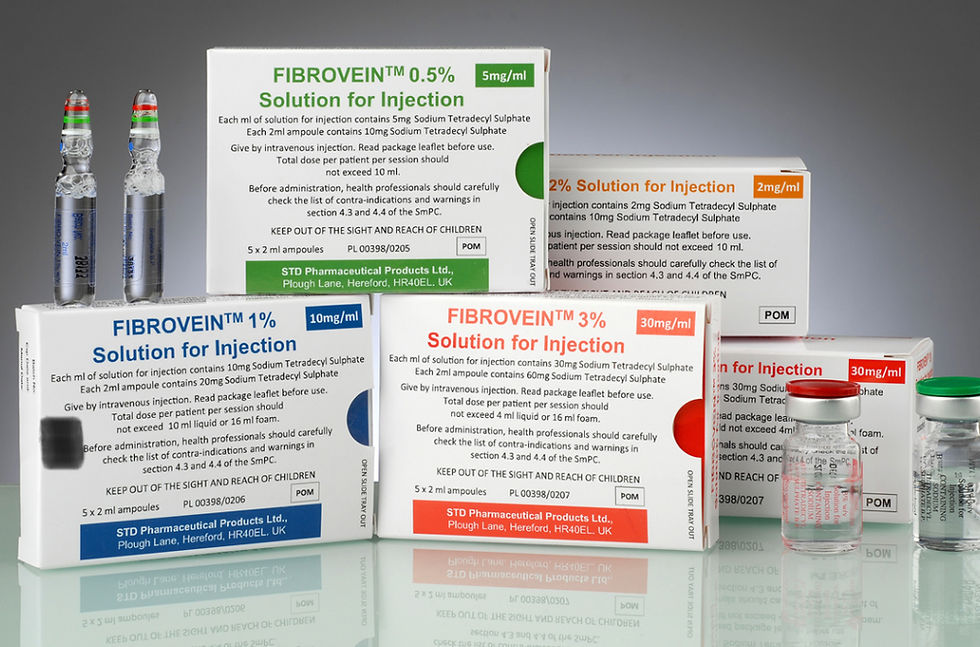
Many people seek treatment to improve both comfort and cosmetic appearance, especially when the veins become more prominent or cause symptom. Body and leg veins can be very successfully treated with injections as an alternative to laser or surgery.

Stage 1
Redness appears occasionally and is often triggered by hot drinks, spicy food, or exercise.
Stage 2
Redness becomes more consistent. Small visible blood vessels (telangiectasia) may appear.
Stage 3
Acne-like breakouts begin, without blackheads. Skin may feel sore or sensitive.
Stage 4
Skin may thicken, particularly around the nose (rhinophyma).
Stage 5
In rare cases, severe rosacea - called phymatous rosacea - can lead to the development of rhinophyma - a bulbous enlargement of the nose, most common in men. Rosacea can also be ocular when it is located on the eyelids, conjunctiva and cornea, manifesting itself as red, watery and very dry eyes.
Different stages of Rosacea:
TREATMENT
Microsclerotherapy and Foam Sclerotherapy Injections